Day 1: Jobs, Communication, and the Post-2027 Vision
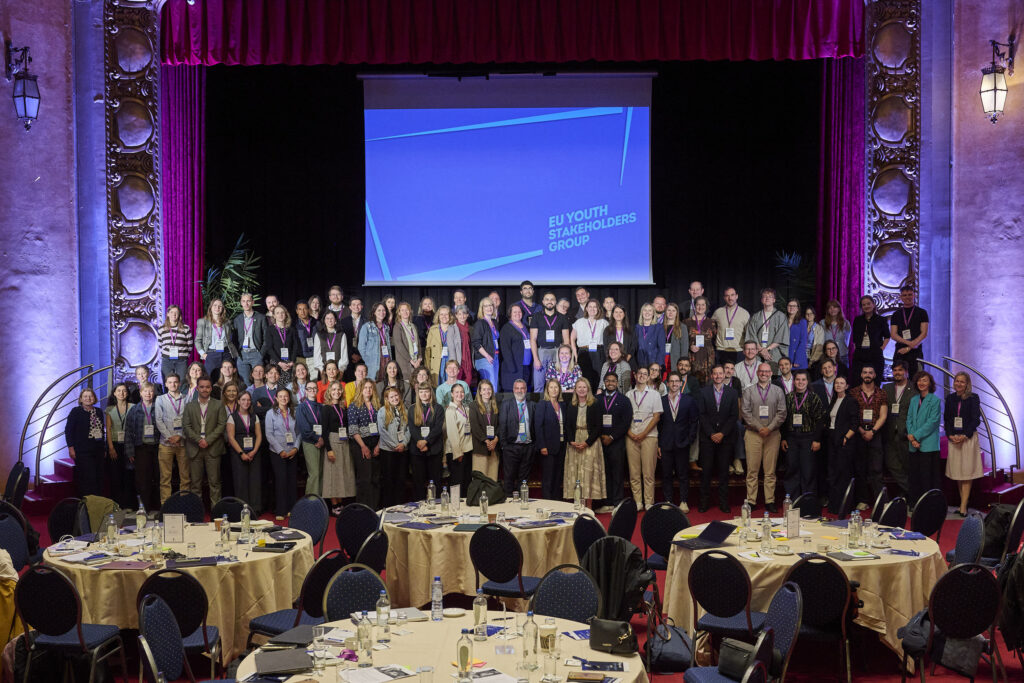
The meeting opened with remarks from the Directorate-General for Education, Youth, Sport and Culture (DG EAC), setting a collaborative tone grounded in co-creation and long-term thinking. Early sessions from the Youth and Intergenerational Fairness Unit highlighted ongoing policy developments and the importance of embedding youth perspectives across EU decision-making.
A key highlight of the morning was a consultation led by DG EMPL (Employment, Social Affairs and Inclusion) on the Youth Check initiative, with a particular focus on the emerging Quality Jobs Act. Discussions centred on how EU legislation can better support young people entering the labour market by ensuring fair wages, safe working conditions, and stronger employment protections. Participants emphasised the need for policies that do not just create jobs but also create quality and sustainable career pathways for youth.
The next session was by DG COMM (Communication), which led a session titled “Understanding Youth Audiences for Effective Communication.” The discussion explored how institutions can better connect with young people in an evolving digital landscape. Key themes included transparency, authenticity, and accessibility, highlighting that effective communication must meet young people where they are, using formats and channels that reflect their everyday media consumption.
The afternoon was dedicated to one of the most significant agenda items: the post-2027 EU Youth Strategy. Stakeholders participated in an interactive consultation designed to gather ideas directly from youth representatives and sector experts. Participants contributed insights to ensure that future EU youth policy remains inclusive, adaptable, and grounded in grassroots realities. Within this, the main points of discussion were the Youth Check initiative, Youth Mainstreaming, the EU Youth Dialogue Process and Youth Work.
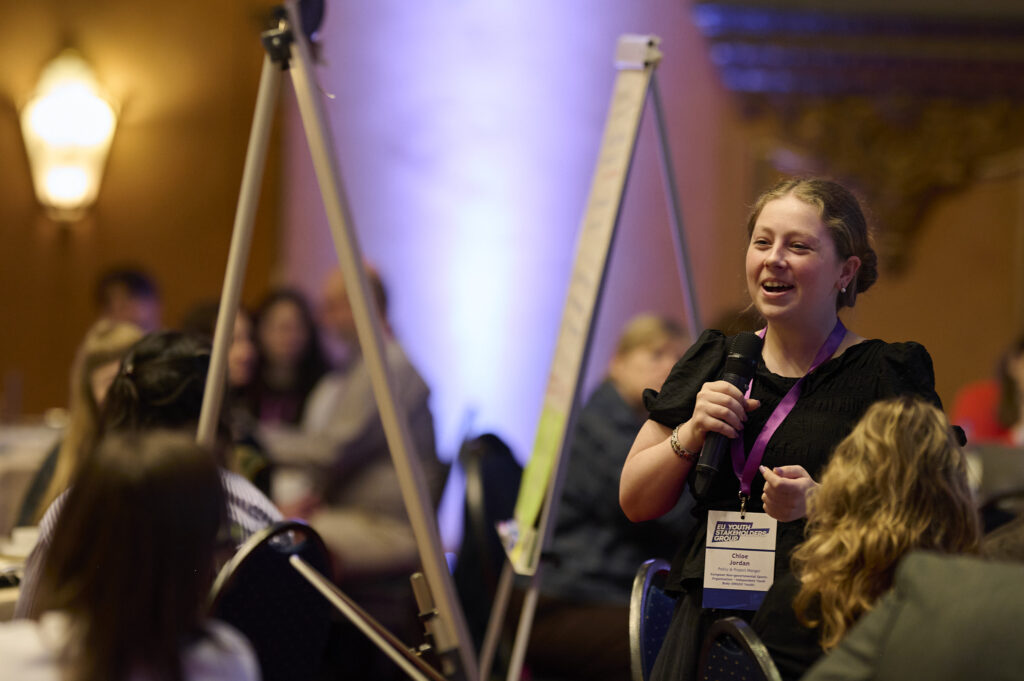
During the consultation, ENGSO Youth emphasised the need to mainstream sport and physical activity within the post-2027 EU Youth Strategy, recognising their proven contribution to young people’s mental and physical health, social inclusion, active citizenship, and civic engagement. We highlighted that grassroots sport is one of the primary spaces for youth participation across Europe and advocated for its greater recognition as a key tool for achieving the Strategy’s objectives.
Day 2:
The second day focused on turning ideas into actionable policy measures. Following a continuation of the strategy consultation, attention shifted back to the Youth Check framework, this time with a focus on education.
DG EAC facilitated discussions on the Education Package, examining how national and EU-level education systems can better support equal access, digital literacy, and holistic skill development. Participants compared approaches across member states and explored how education policy can better prepare young people for rapidly changing social and economic environments.
The meeting concluded with an interactive reflection session titled “What I take away…”, allowing participants to consolidate insights and identify shared advocacy priorities. This session also helped strengthen cross-border collaboration between youth organisations and policy actors.
For ENGSO Youth, participation in the EU Youth Stakeholders Group was a valuable opportunity to elevate youth perspectives in European policy discussions and to provide insight into how grassroots sport could support the policies and ideas under discussion. The insights gained will contribute to the ongoing advocacy work within ENGSO Youth and it’s advocacy when looking at the EU Youth Stratgey post-27.