Under the theme “Measure to Matter” and across three panel discussions and a keynote conversation, the event explored how measurement and evidence can strengthen governance, policy formulation, and impact for gender equality in sport.
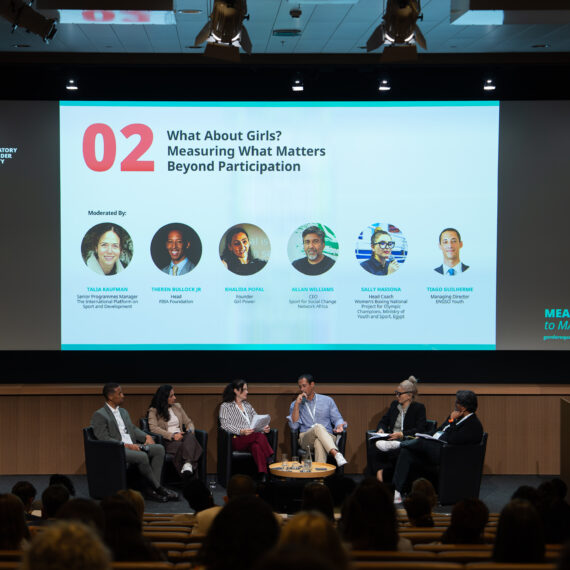
ENGSO Youth managing director, Tiago Guilherme was amongst the speakers of panel two, under the topic “What about girls? Measuring Participation, Empowerment and Health”, joined by:
Theren Bullock Jr., Head of Foundation at FIBA, Switzerland;
Allan Williams, CEO at Sport for Social Change Network, South Africa;
Sally Hassuna, Head Coach at the Ministry of Youth and Sport, Egypt;
Khalida Popal, CEO at Girl Power, United Kingdom;
Talia Kaufman (Moderation), Senior Programmes Manager at sportanddev, Germany.
The session addressed persistent gaps in girls’ participation in physical education, physical activity and sport, focusing on how participation, empowerment and health outcomes are measured, and how these measurements influence policy and programme decisions.
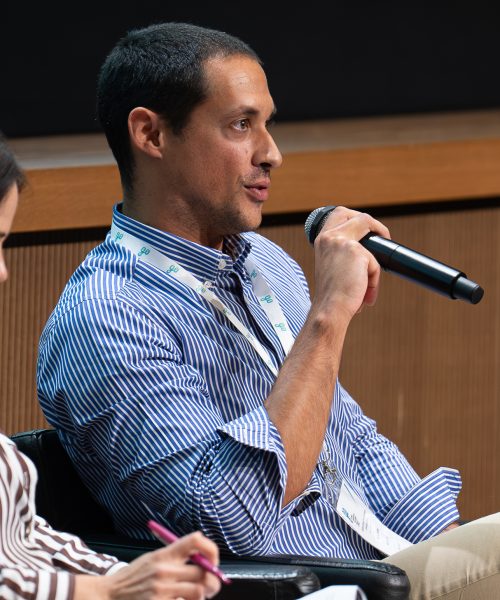
Crucial to the discussion, Tiago presented ENGSO Youth approach, one that moves beyond participation rates to capture experiences, voices and long-term engagement.
In doing so, he underlined three key factors for effective and meaningful participation of young women in sports:
It is crucial to combine quantitative and qualitative data for an improved understanding of the current state of play of female participation in sport and the underlying factors that support or restrain that participation;
Gender equality should be duly considered in sport organisations statutes. He exemplified how ENGSO Youth standing orders require a gender balanced representation for the members elected at the ENGSO Youth Committee. This gender balanced requirements are also present across ENGSO Youth activities, including the Young Delegates Programme (ENGSO Youth volunteering programme). Likewise, ENGSO commitment to gender equality was also exemplified with the work developed by other ENGSO committee created specifically to address this topic, the Equality within Sport Committee (EWS);
Policy formulation should meaningfully involve young women across the whole cycle, from problem definition, research and agenda setting, to policy development, implementation and evaluation. He also underlined that due to the complexity of the challenges we face, the limited resources and time, we often tend to skip one or two steps along the way, therefore failing to address the root causes.
ENGSO Youth would like to thank the Global Observatory for Gender Equality and Sport for hosting such an important event and all speakers and participants that engaged in this shared discussion with us. We remain committed in leading by example in developing gender equality in sport.