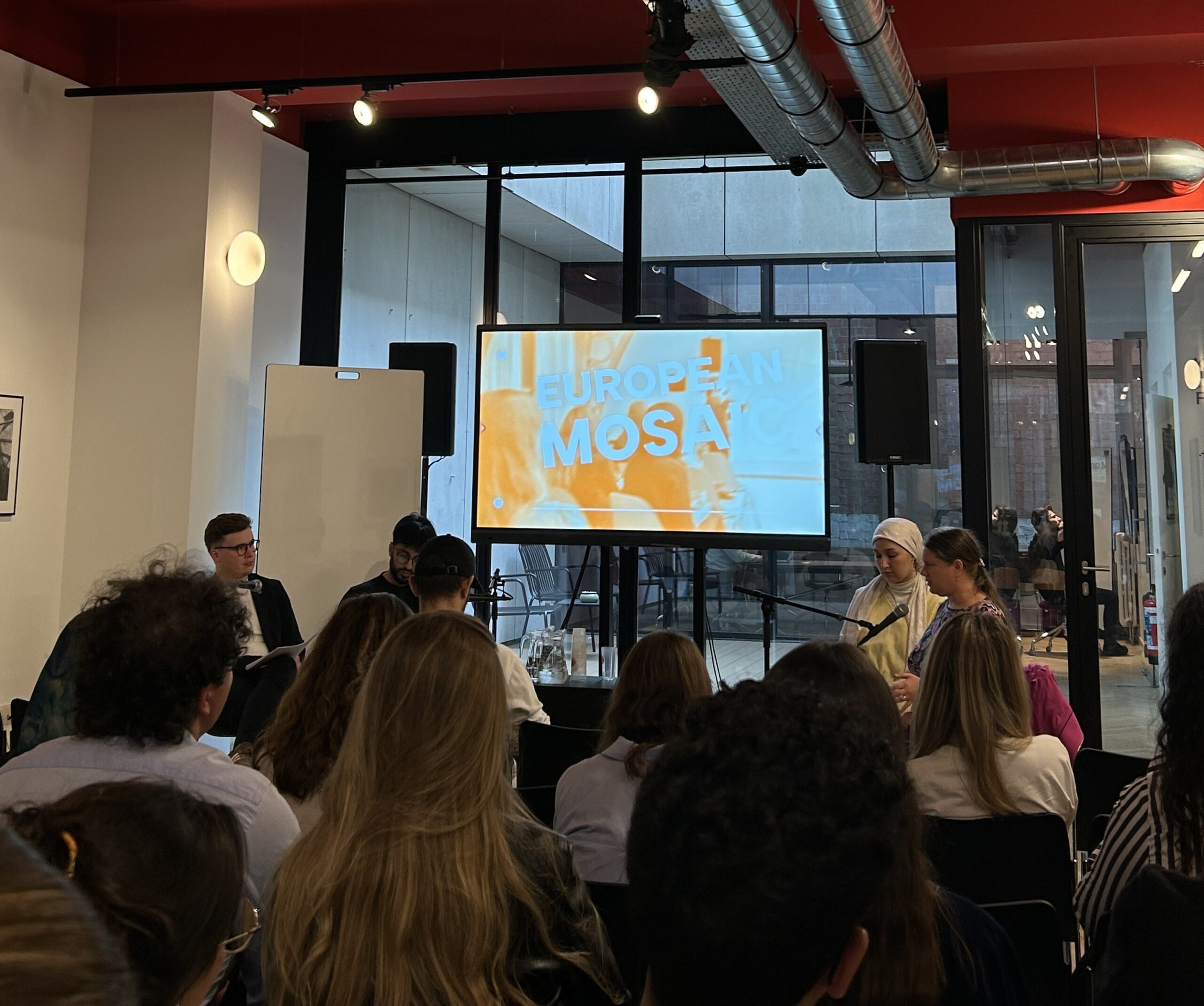
The consultation brought together youth advocates and organisations from across Europe to reflect on how youth spaces can become more inclusive, accessible and responsive to the experiences of young people from different backgrounds.
As part of the consultation, participants took part in discussions with Dr Violeta Vajda from Phiren Amenca and Margot Tortonese from ATD Fourth World. The conversations explored how youth organisations can meaningfully strengthen the participation of Roma young people and young people experiencing extreme poverty.
These discussions highlighted the importance of looking critically at existing approaches to inclusion. The perspectives shaping youth organisations can often reflect privileged experiences, potentially overlooking the barriers faced by young people from marginalised communities.
The official programme concluded with a panel discussion featuring Abdulsami Arjumand from VOICIFY, Loredana Dicsi from the European Disability Forum (EDF), and Loubna R. from the European Network Against Racism (ENAR), moderated by Caillum Hedderman, President of the European Youth Forum.
The discussion contributed to wider reflections on inclusion, representation and the conditions young people need to participate meaningfully in youth organisations.
Beyond the formal sessions, the consultation also provided an opportunity to connect with advocates and representatives from youth organisations across Europe. Their commitment to raising awareness of important issues and advocating for more inclusive spaces demonstrated the value of cooperation and shared learning across the youth sector.
Sport can offer young people opportunities to build relationships, develop skills and take part in their communities. However, meaningful participation depends on whether sporting environments are accessible, welcoming and responsive to different experiences and needs.
Strengthening inclusion therefore requires sport organisations to listen to young people, question established practices and recognise that not everyone faces the same barriers to participation. Learning from organisations and communities with different experiences can help the sport sector develop more effective approaches to youth engagement.
By continuing to learn from underrepresented communities and working across sectors, ENGSO Youth remains committed to supporting sport environments where every young person has the opportunity to participate, contribute and feel that they belong.