


ENGSO Youth at COP30 via Young European Leadership (YEL)
Author: Maurice Bessling


Held 10–21 November 2025 in Belém, Brazil.
From the 10th to the 21st of November 2025, the world gathered in Belém, Brazil, for the 30th meeting of the Conference of the Parties (COP30). The conference was historic, not only because of its location at the gateway to the Amazon, but because it brought together voices from all continents with one urgent mission: to safeguard our planet for future generations. As a young European delegate with Young European Leadership (YEL) and being an ENGSO Youth delegate in my other life, I was there to make sure the youth and grassroots sport perspective was heard loud and clear.
Why were we there, and what did we aim for?
ENGSO Youth’s mission is to give youth a real say in sport and we believe that sport, especially grassroots sport, can and should play a vital role in tackling the climate crisis. Through Young European Leadership (YEL), I was invited to COP30 to:
- Bring youth-led sport initiatives into the global climate dialogue,
- Share European good practices and learn from communities around the world,
- Connect with social, environmental and youth movements to build alliances across sectors.
In a time of interconnected crises, we are convinced that sport is not just about health or recreation; it’s also about community, empowerment, and a sustainable future.
What was COP30 like?
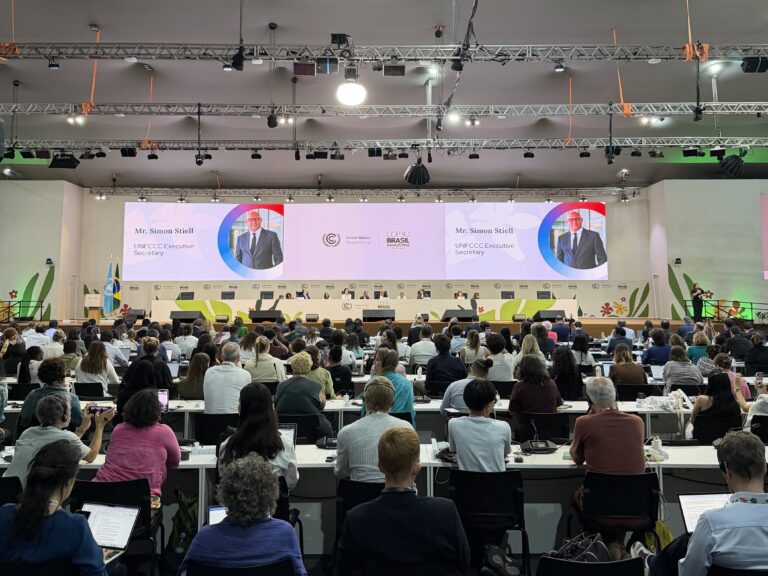
Walking into COP30 felt like entering a massive global community, researchers, activists, local leaders, indigenous voices, and young people, all together in one place. The energy was intense but hopeful. Negotiations and formal sessions were complemented by grassroots activism, workshops, networking events, and countless conversations outside official panels.
What struck me most was the clear shift: climate conferences are no longer only about governments and policymakers. They are about people, communities, and local action.
What did we learn — Key takeaways & outcomes
1. Grassroots sport as climate educator.
Local sports clubs and community sport organisations often represent the first and most accessible point of engagement for many young people. They can become powerful tools to promote sustainable habits, environmental awareness, and collective responsibility.
Sport clubs can foster not only physical health, but also climate-conscious lifestyles, by integrating low-carbon behaviour, encouraging active mobility, promoting nature-based activity, and facilitating community solidarity, all key ingredients for sustainable societies.
2. Inclusion of sport in climate strategies.
At COP30, I witnessed promising examples from different world regions where sport is recognised as a relevant sector for climate adaptation and social resilience. This reinforced the message: when countries develop national climate strategies, they should consider the sport sector, especially grassroots sport, as a meaningful arena for climate action and social inclusion.
3. Youth leadership matters more than ever
Young people were not just present, we were shaping the conversations. Through participation in youth-led panels and cross-regional exchanges, we demonstrated that the younger generation is ready to lead, mobilise communities, and drive innovative solutions that link sport, sustainability, and social change.
4. Global solidarity & interconnection
Being in the Amazon region underlined the urgency of climate justice. Conversations with Indigenous communities and local leaders showed that environmental protection, cultural survival, and community health are inseparable, and that climate change hits the most vulnerable first. That reinforced our commitment: European grassroots sport cannot remain isolated but must build solidarity links globally and support climate-resilient, inclusive sport for all.
5. Opportunity for young people and grassroots sport networks
For young people, COP30 was both a challenge and a clarion call, to strengthen our sustainability initiatives, to embed environmental awareness into grassroots sport, to give young people the tools to act, and to build bridges between sport, youth, community development and climate action.
What this means for our grassroots sport community
Grassroots sport is more than recreation; it is community, identity, health, inclusion, and education. It has the potential to become a cornerstone of sustainable, climate-aware societies by:
- Empowering young people through sport to act for the planet
- Embedding environmental awareness and sustainable practices in local clubs and organisations
- Promoting active mobility, nature-based sport and low-carbon lifestyles
- Strengthening solidarity, inclusion and resilience through community sport
ENGSO Youth stands ready to support and having a seat at the table.
Looking Ahead — Next Steps for ENGSO Youth
My return from Belém came with renewed motivation and responsibility. For ENGSO Youth, the path is clear: we will advocate for stronger links between sport and sustainability at European and national levels; encourage grassroots clubs to adopt eco-friendly practices; support youth-led environment-sport projects; and continue building international partnerships to champion inclusive, climate-resilient sport for all.
Because the climate challenge is global and so must be our response. As young Europeans who believe in the power of grassroots sport, we are committed to helping shape a future where sport and sustainability go together.